Search has quietly changed its personality.
Not long ago, you would type something into Google, scan a list of links, open three tabs, close five more, and slowly piece together your answer. That muscle memory still exists. But now, more often than not, the answer just… appears.
A paragraph, a list, a recommendation. Done.
And if you work in SEO, it’s not just another feature update. It’s a structural change that is driving the rise of GEO alongside traditional SEO.
Let’s dig into it.
The Simple Definition Everyone Uses (And Why It Falls Short)
Generative AI in search is usually described as systems that generate answers using large language models instead of just listing links.
That’s accurate, but it doesn’t really explain what’s happening.
Think of it this way. Traditional search is like a librarian pointing you to the right shelf, but generative AI is the librarian reading multiple books, summarizing them, and handing you a neat answer.
The difference is subtle on the surface, but it’s massive underneath.
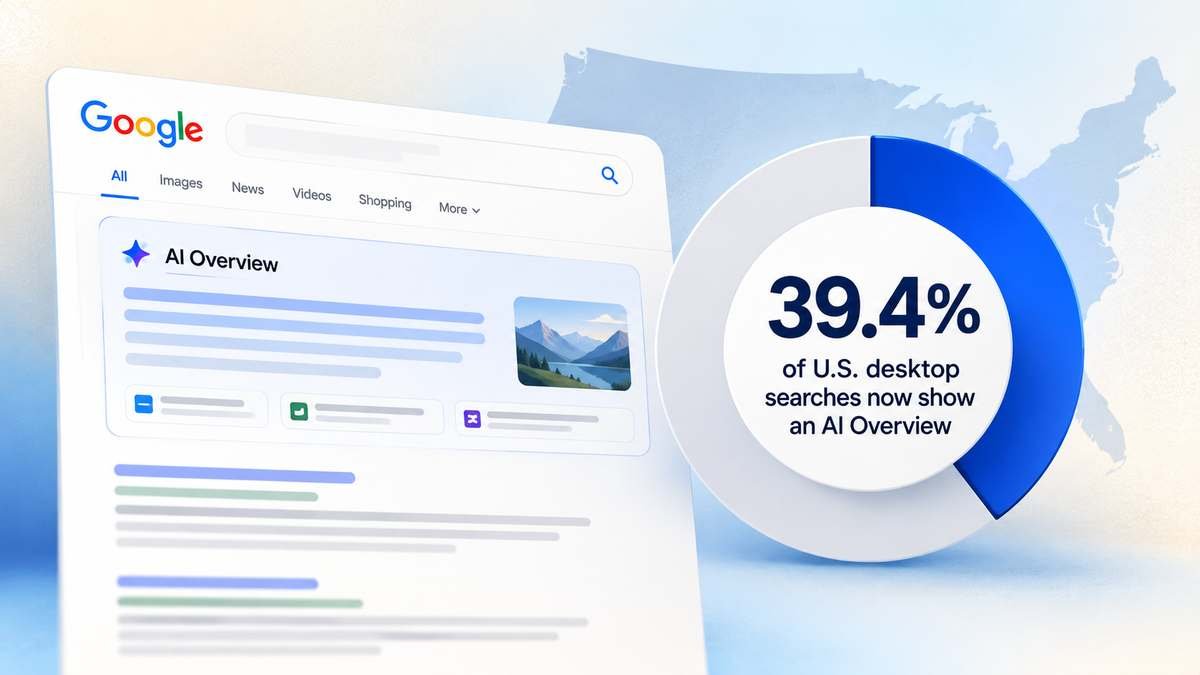
Platforms like ChatGPT, Google AI Overviews, and Perplexity AI are all doing variations of this. They pull information, process it, then generate something new.
Not just retrieval, but creation layered on top of retrieval. And that’s where SEO starts to feel different.
How We Got Here: From Keywords to Conversations

Search didn’t jump straight into generative AI. It took its time.
Early search engines were blunt tools. You typed “best phone,” and results matched those words. Over time, things got smarter. Semantic search came in. Context started to matter. Updates like Google Hummingbird and BERT pushed search toward understanding intent instead of just matching phrases.
Then came the big shift.
Large language models like GPT-4 and PaLM made it possible to generate human-like responses at scale. Not snippets, not extracted text, but freshly constructed answers.
Search engines didn’t ignore that. They absorbed it.
Now we’re in this hybrid phase where:
- Traditional ranking systems still exist
- AI layers sit on top and reshape output
- User behavior is shifting quietly but consistently
And honestly, we’re still early.
What Actually Happens When You Search Now
Let’s walk through a modern search interaction.
You type a query: “best protein sources for vegetarians”
In the old model, Google would:
- Fetch relevant pages
- Rank them
- Show links
Now, with generative AI involved, the process expands.
Step 1: Understanding the Query
The system doesn’t just read keywords. It interprets intent. It knows you’re looking for options, maybe comparisons, possibly dietary insights.
Tools like Google’s Natural Language API give a glimpse into how machines break down meaning.
Step 2: Retrieving Information
Relevant documents are still pulled from the index. That hasn’t gone away. Systems like Elasticsearch or Google’s internal infrastructure still do the heavy lifting here.
Step 3: Synthesizing Content
Here’s where things change.
Instead of choosing one page, the AI pulls from multiple sources, merges ideas, filters noise, and prepares a structured response using modern AI retrieval and content chunking methods.
Sometimes it cites sources, sometimes it doesn’t.
Step 4: Generating the Answer
A clean, readable answer is produced. It might include:
- A list of foods
- Nutritional notes
- Quick comparisons
All stitched together in real time.
No single page looks exactly like that answer. It’s assembled on the fly.
Generative AI vs Traditional Search: Not a Small Upgrade
This is not just “search but better.” It’s a different interaction model.
Aspect | Generative AI | Traditional Search |
Output | Direct answers | Links |
Effort | User-driven | System-driven |
Source | Multiple combined | Single page |
Experience | Conversational | Linear |
And the biggest shift? Clicks are no longer guaranteed.
According to data from SparkToro, a significant portion of searches already end without a click. Generative AI accelerates that trend.
Which leads to a slightly uncomfortable question for SEOs. If users don’t click, what are we optimizing for?
The Rise of AI Answers and the Decline of Click Dependency
Let’s be honest. Traffic has always been the scoreboard, where you rank higher, get more clicks, and grow your site, but generative AI complicates that equation.
Now, answers appear before links, users get what they need instantly, and many never scroll.
Research from Similarweb shows early signs of traffic redistribution as AI-driven interfaces grow.
And yet, visibility hasn’t disappeared, but it’s changed form, so instead of asking: “Do I rank number one?”, the better question is: “Am I being used to generate the answer?”
That’s a very different game.
Enter Generative Engine Optimization (GEO)
SEO isn’t going away, but it’s evolving.
Generative Engine Optimization, or GEO, is the emerging layer on top of traditional SEO. It focuses on making your content usable for AI systems. Not just readable by humans, not just crawlable by bots, but understandable, extractable, and trustworthy for machines that generate answers.
Some shifts become obvious when you look closely:
- Content clarity matters more than clever writing
- Structure becomes critical; headings, sections, and clean formatting help machines parse information
- Entity signals gain importance, especially when tied to sources like Wikidata or structured databases
- Context depth often beats surface-level coverage
And yes, backlinks still matter, but they are part of a larger trust framework now.
What Makes Content “AI-Friendly”

This is where things get practical.
AI systems don’t “read” like humans. They process patterns, structure, and relationships. So certain types of content tend to perform better in AI-generated outputs.
Clear, Direct Explanations
Content that answers a question early and clearly is easier to extract. Tools like Hemingway Editor can help simplify overly complex writing.
Structured Formatting
Well-defined sections, meaningful headings, and logical flow improve machine understanding. Google’s own Search Central documentation hints at this.
Topical Authority
Sites that cover a subject deeply are more likely to be trusted. Platforms like Ahrefs have explored how depth impacts visibility.
Consistency Across Pages
When your site speaks coherently about a topic across multiple articles, it becomes easier for AI systems to rely on it. This isn’t a checklist. It’s more of a pattern.
Real-World Example: How AI Picks Sources
Let’s say you run a fitness blog.
You publish an article titled “Best Vegetarian Protein Sources,” and it’s well-written but buried under fluff before getting to the point, while another site publishes a simpler guide that lists sources clearly, explains each briefly, and structures everything neatly.
Which one gets picked?
Often, the second one, because it’s easier to extract, and studies like the one by Originality.ai suggest that AI systems frequently rely on content that is clean, direct, and well-structured.
Not necessarily the most “beautifully written” piece, and that’s a bit uncomfortable for writers, but it’s reality.
The Limitations Nobody Likes to Talk About
Generative AI isn’t perfect, not even close.
Accuracy Issues
AI can get things wrong. It may combine outdated information or misinterpret context. Even Stanford’s AI research highlights ongoing reliability challenges.
Lack of Transparency
Sometimes you don’t know where the answer came from. Attribution is inconsistent.
Content Compression
Nuance gets lost. Detailed topics are reduced into short summaries, which can oversimplify things. And then there’s the publisher concern, with less traffic, less control, and more dependency on platforms.
Where This Is Heading
We’re moving toward a more conversational web. Search will feel less like searching and more like asking. AI agents will likely take this further. Tools like AutoGPT hint at a future where systems don’t just answer questions but complete tasks.
Imagine:
- Planning a trip without opening ten tabs
- Comparing products without visiting multiple sites
- Getting recommendations that evolve with follow-up questions
Search becomes a layer, not a destination.
What Should SEO Professionals Actually Do Now
No dramatic pivots. No panic. But a few shifts are hard to ignore:
- Focus on clarity over cleverness
- Build depth instead of chasing isolated keywords
- Structure content so it’s easy to extract and understand
- Strengthen brand and trust signals; they matter more in AI-driven environments
And maybe most importantly, start observing. Search results today won’t look the same a year from now.
Final Thought
Generative AI hasn’t killed search, but it has changed the way answers are built.
Links still exist. Rankings still matter, but they’re no longer the full story. The real shift is this: search engines are becoming answer engines, and if your content isn’t part of those answers, it doesn’t matter where you rank.