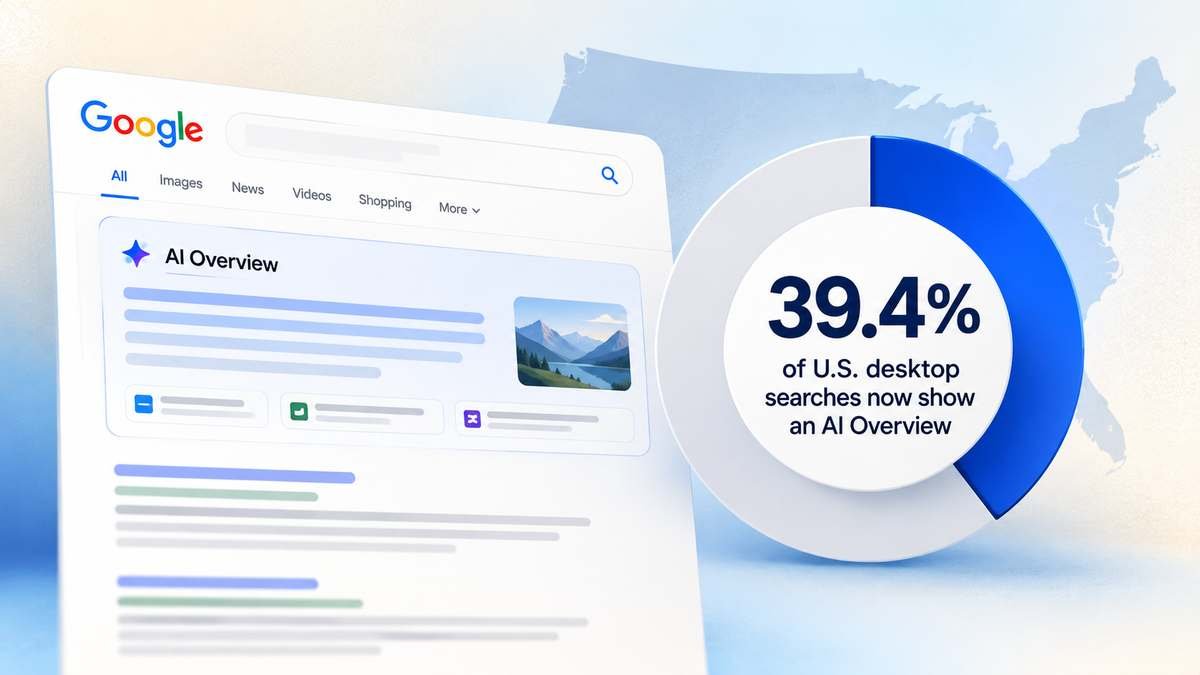
Most content today is still written like it’s 2018. Big blocks, vague headings, keywords sprinkled like seasoning. It works, sometimes. But when an AI system tries to read it, things quickly fall apart.
I realised this the hard way while auditing a few pages that ranked well in traditional search but barely showed up in AI-generated answers. Same content, same authority. Different outcome. The issue wasn’t quality. It was structure.
AI doesn’t ‘read’ like humans. It retrieves, slices, ranks fragments and assembles meaning – the same process used in modern generative AI search systems.
Let’s break down how to fix that.
Why Structure Matters More Than Ever
When systems like Google or OpenAI process content, they don’t consume full pages in one go. They rely on retrieval pipelines.
That means your article is split into chunks, scored for relevance, and then recombined into answers.
So if your key idea is buried inside a long paragraph, it might never be picked up. Not because it’s bad, but because it’s invisible to the retrieval layer.
Think of it this way. You’re no longer writing just a page. You’re writing a collection of extractable units, which is increasingly important for both GEO and traditional SEO visibility.
Chunking: The Backbone of AI-Friendly Content
Chunking sounds technical, but it’s just disciplined structuring.
A chunk is a self-contained piece of information that can stand on its own. Not too long, not too thin.
What good chunking looks like:
- Clear heading + tight explanation
Instead of vague titles, use headings that answer a specific question or define a concept. For example, “What is Semantic SEO” works better than “Understanding SEO” - Paragraphs that don’t wander
Each paragraph should stick to one idea. If it drifts, split it. AI systems prefer clean boundaries - Context inside the chunk itself
Don’t assume the reader saw the previous section. Each chunk should carry enough meaning independently - Natural repetition without keyword stuffing
Yes, some overlap is useful. If you mention “internal linking strategy” in multiple sections with slight variation, retrieval improves
I’ve seen pages improve visibility just by restructuring content into tighter chunks without adding a single new keyword.
Entities: The Real Keywords Now
Keywords haven’t disappeared. They’ve just evolved.
Search engines now rely heavily on entities, which are clearly defined concepts, people, brands, or things. When you mention an entity, you’re helping the system anchor your content in a knowledge graph.
For example, mentioning Ahrefs or SEMrush is more than name-dropping. It signals context.
How to use entities properly
- Be specific, not generic
“SEO tool” is vague. “Ahrefs backlink analysis tool” is precise and machine-readable - Add light context around entities
Don’t just mention a name. Briefly explain what it does, even in a few words - Connect entities naturally
If you’re discussing content optimization, linking concepts like Google Search, NLP, and structured data creates a semantic web inside your article - Avoid forced inclusion
If it feels unnatural, it probably is. Entities should fit into the narrative, not interrupt it
You’re essentially helping AI understand relationships, not just words.
Semantic SEO: Writing for Meaning, Not Matching

Semantic SEO has been around for years, but AI retrieval has made it unavoidable.
It’s no longer about matching exact phrases. It’s about covering a topic in a way that reflects how it actually exists in the real world.
What that means in practice
- Cover related subtopics naturally
If you’re writing about “content structure,” you should also touch on headings, internal linking, readability, and information hierarchy - Use varied language
Instead of repeating “AI retrieval,” mix in “information extraction,” “content indexing,” or “retrieval systems” - Answer implicit questions
A good piece doesn’t just answer the main query. It anticipates follow-ups - Structure reflects understanding
If your headings flow logically, AI picks up on that. If they feel random, it does too
A useful reference here is Google’s own documentation on <a href=”https://developers.google.com/search/docs/fundamentals/creating-helpful-content”>helpful content guidelines</a>, which indirectly aligns with semantic structuring.
The Overlooked Layer: Formatting Signals
This part gets ignored a lot.
Formatting isn’t just for readability. It acts as a signal layer for AI systems.
Small changes that make a difference
- Use descriptive subheadings instead of clever ones
- Break long sections even if they read fine to humans
- Use lists where clarity improves, not for decoration
- Keep sentences varied; uniform structure reduces richness
Even something as simple as rewriting a dense paragraph into two smaller ones can change how it gets retrieved.
A Real-World Example
We restructured a long-form guide on link building recently. No new backlinks, no major rewrites.
What changed?
- Broke 2,500-word sections into smaller chunks
- Added entity references like Google Search Console and specific tools
- Rewrote headings into question-based formats
- Expanded thin sections with context
Within weeks, parts of that page started appearing in AI-generated summaries. Not the whole page. Just the chunks that were clean and self-contained.
Where Most Content Still Goes Wrong

A lot of content is still written as if ranking is the final goal. It’s not.
Visibility now depends on whether your content can be extracted, understood, and reused.
Common issues I keep seeing:
- Overloaded paragraphs with multiple ideas
- Headings that don’t say anything meaningful
- No entity clarity
- Keyword-first writing instead of topic-first thinking
And sometimes, the content is actually good. Just not structured for how machines consume it.
Key Takeaway
You don’t need to reinvent your content strategy. But you do need to rethink how your content is assembled.
And the pages that adapt to this shift aren’t necessarily longer or more detailed. They’re just easier to retrieve. Write like someone might pull pieces of your article out of context and still expect them to make sense.