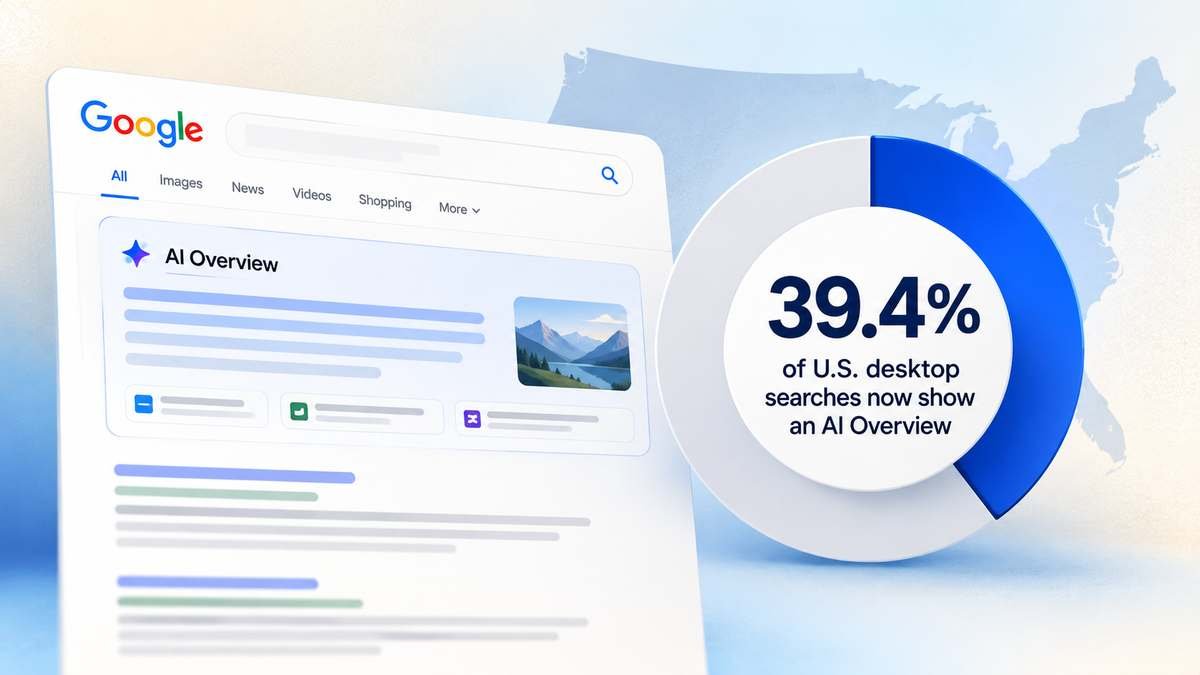
Over the last two years, you search less, you ask more. Instead of clicking ten blue links, you get a composed answer, sometimes with sources, sometimes with confidence that feels… human.
That change didn’t just happen. It was engineered, and it’s still evolving.
Let’s unpack how generative AI search engines actually work. Not the surface-level “they use AI” explanation, but what’s happening underneath when you type a query into tools like ChatGPT, Gemini, or Perplexity AI.
From Search Engines to Answer Engines
Traditional search engines like Google Search were built on a simple idea: index the web, rank pages, and return links, while you did the synthesis.
Generative AI flipped that. Now the system reads, interprets, and synthesizes information for you, so the output is no longer a list but a response.
But don’t assume this is just “Google plus ChatGPT.” It’s a layered system with multiple components working in sequence.
If you want a technical deep dive, the transformer architecture paper Attention Is All You Need explains the foundation behind modern AI systems, while Google’s original PageRank research shows how ranking itself evolved.
The Three-Layer Architecture Behind AI Search

Most generative AI search engines operate on a three-layer system. It’s not always presented this way, but this mental model helps.
1. The Language Model (The Brain)
At the center is a large language model, like GPT-4 or Google’s Gemini models.
These models are trained on massive datasets including books, websites, code, and forums, so they learn patterns rather than facts in the traditional sense.
Think of it this way: they don’t “know” answers, they predict the most probable next word based on context.
If you want to go deeper, OpenAI’s technical overview of GPT models explains how training and inference work, while Google’s Gemini documentation shows how multimodal reasoning is handled.
But here’s the catch. On their own, these models hallucinate, and sometimes very confidently.
2. Retrieval Layer (The Reality Check)
This is where modern AI search engines separate themselves from early chatbots, because instead of relying purely on training data, they fetch real-time information from the web or indexed sources.
This process is often called Retrieval-Augmented Generation (RAG).
Here’s how it works in simple terms:
- You ask a question – the system interprets intent and prepares a search query
- The system searches relevant documents or web pages – often across multiple sources in parallel
- It pulls snippets or structured data – extracting the most relevant parts instead of full pages
- The model uses that information to generate a grounded answer – ideally reducing hallucinations
Perplexity does this very explicitly, and every answer includes citations. You can explore how this works in practice through the Perplexity AI blog, where they break down their real-time search approach.
Microsoft also integrates retrieval in Microsoft Copilot using Bing’s index, and their architecture is detailed in the Microsoft Copilot documentation.
This layer is critical because without it, AI answers drift.
3. Orchestration Layer (The Hidden Operator)
This is the least talked about, but arguably the most important layer, because it decides when to search, what sources to trust, how to structure the response, and whether to call external tools.
In systems like ChatGPT with browsing or plugins, this layer acts like a controller that routes tasks between the model, search APIs, and sometimes even calculators or code interpreters.
Google’s approach is tightly integrated into search itself, as explained in its Search Generative Experience overview, while Anthropic’s tool use documentation shows how models are learning to call external functions intelligently.
How ChatGPT Handles Search Queries
ChatGPT wasn’t originally built as a search engine; it was designed as a conversational model shaped by the broader evolution of LLMs from chatbots to intelligent assistants, but that changed once browsing and retrieval features were introduced.
Here’s roughly what happens now: the query is analyzed for intent, and if real-time data is needed, browsing is triggered. Relevant sources are fetched, and the model synthesizes an answer.
Sometimes it doesn’t search at all, especially if the query is general knowledge, so it relies on training data instead.
And this is where users get confused. You might ask for “latest SEO updates” and get outdated information if retrieval isn’t triggered properly.
OpenAI’s evolving approach is discussed in its official blog updates, where they explain how browsing and retrieval are being refined.
How Gemini Integrates with Google Search
Gemini is deeply tied to Google’s search infrastructure, which gives it a major advantage because instead of “adding search,” it sits on top of one of the largest web indexes ever built.
When you use AI Overviews in Google, the query is processed using traditional ranking systems, relevant documents are selected, Gemini generates a summarized answer, and citations are embedded within the response.
Think of it as a hybrid model where search ranking still matters.
Google’s ranking systems are explained in How Search Works, while its AI principles outline how the company approaches responsible AI deployment.
This however creates a clear conflict, because now Google is both the gateway and the destination.
How Perplexity Does It Differently
Perplexity feels closer to a research assistant than a search engine, and that’s intentional because every query triggers retrieval instead of guessing.
Its workflow is more transparent: it searches the web in real time, selects multiple sources, generates a response with inline citations, and allows follow-up questions within context.
This makes it particularly useful for academic queries, market research, as well as fact verification.
If you want to explore further, its documentation and API reference explain how developers can build on top of its answer engine.
Why These Systems Sometimes Get It Wrong
Even with retrieval, errors happen, and they happen for specific reasons.
- Source quality varies – not everything on the web is reliable, and weak inputs lead to weak outputs
- The model may misinterpret retrieved content – especially when context is complex or ambiguous
- Conflicting sources create ambiguity – the system has to “choose” a version of truth
- Query intent isn’t always clear – vague questions lead to unstable answers
There’s also a deeper issue. These systems optimize for helpfulness, not absolute truth, which means they sometimes fill gaps instead of admitting uncertainty.
Stanford’s research on hallucinations in language models is explained in this Stanford HAI article, which explores why models generate confident but incorrect outputs, while OpenAI has acknowledged these limitations in its GPT best practices guide, explaining how and why such behaviors still persist despite improvements.
The SEO Shift No One Can Ignore
If you run a website, this changes everything, because visibility is no longer just about ranking but about being cited.
AI search engines don’t just list pages, they extract information, which means structured and clear content performs better, authority signals matter more, brand mentions influence inclusion, and topical depth increases visibility.
And here’s the uncomfortable part. Users don’t always click.
SparkToro’s study on zero-click searches shows that less than half of Google searches result in a click, and the trend has only accelerated with AI-generated answers.
What This Means for the Future of Search

Search is becoming conversational, but not in a superficial way, because it’s turning context-aware, multi-turn, and increasingly personalized.
And increasingly, invisible. You don’t “search,” you interact.
But this raises questions about who controls the answers, which sources get included, and how biases propagate through these systems.
The European Union’s regulatory approach is outlined in the EU AI Act overview, while ongoing industry analysis can be followed through MIT Technology Review’s AI coverage.
A Simple Way to Think About It
If traditional search was like asking ten different people for recommendations and then deciding what to trust… Generative AI search is like asking one well-read assistant who has already spoken to all ten and gives you a single, confident answer.
Sometimes that assistant is sharp and precise. Sometimes it overgeneralizes. But it always responds instantly. And just like any assistant, the quality of the output depends on the sources it considered, how well it interpreted them, and what exactly you asked in the first place.