The question shows up everywhere now. On LinkedIn threads, in SEO Slack groups, during client calls that suddenly turn existential.
“Is SEO dead?”
Usually, the question comes right after someone mentions OpenAI, Google’s AI Overviews, or the latest demo from Anthropic.
And I get it. When machines start answering questions directly, skipping the need to click, it feels like the ground is shifting under your feet.
But here’s the uncomfortable truth. SEO isn’t dead. It’s just not what most people think it is anymore.
The Panic Feels Familiar
If you’ve been in SEO long enough, this isn’t your first “SEO is dead” moment.
People said it when Google rolled out featured snippets, again when mobile-first indexing came in, and then during every major algorithm update like Google Panda or Google Penguin. And yet, here we are.
But generative AI does feel different because this time it’s not just ranking links differently, it’s replacing the interface itself.
Look at it from another angle. Earlier, Google was a librarian. Now it’s trying to become the author. That’s a big shift. Platforms like ChatGPT, Perplexity AI and Gemini don’t just point to answers, they generate them, and yes, that directly affects organic clicks.
What’s Actually Changing
Let’s get specific because vague fear doesn’t help anyone.
1. Clicks are becoming optional
Earlier, ranking meant traffic. That relationship is weakening.
With AI Overviews, a user might search something like “best CRM for small business” and get a full answer right there, no clicks required.
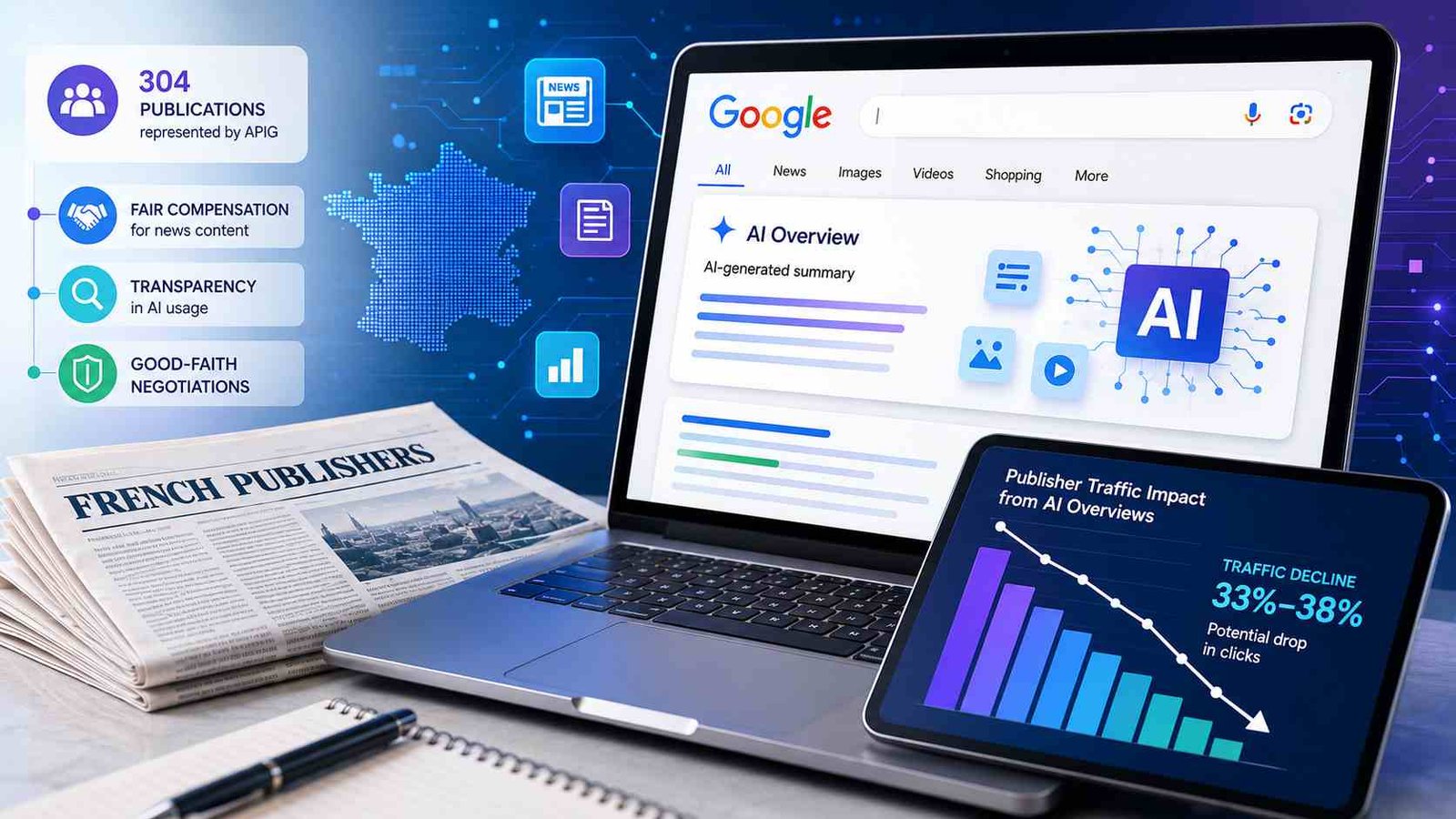
Tools like Semrush and Ahrefs are already showing signs of declining CTRs on informational queries. Recent large-scale studies show that organic clicks can drop by around 58% when AI Overviews appear, as highlighted in this AI Overviews CTR impact study.
But the situation isn’t uniform across queries.
- High-intent queries still drive clicks – if someone searches “buy noise cancelling headphones under 10000”, they want options, reviews and pricing, not just a summary
- Complex queries need depth – AI summaries are decent but often lack specificity, so users still click for examples, comparisons or fresh data
- Trust-sensitive topics demand validation – health, finance and legal queries still push users to verify information
So yes, clicks are declining in some areas, but they’re not disappearing.
2. Rankings are no longer the only game
Earlier, SEO success was simple. Rank on page one, preferably in the top three. Now, you could rank #1 and still lose visibility if your content isn’t being picked up by AI systems.
This is where things start to shift meaningfully.
AI models pull information from across the web, and sources that are clear, well-structured and authoritative have a better chance of being cited or summarized. Suddenly, ranking becomes just one layer of visibility.
Visibility now includes:
- Being referenced in AI-generated answers
- Being part of training or retrieval datasets
- Being trusted as a source, not just indexed as a page
Platforms like Google Search Console won’t fully capture this shift yet, but it’s already happening.
3. Content quality is being redefined
For years, “quality content” often meant well-optimized content. Keywords in headings, decent structure, some backlinks. That was enough.
That bar is gone. AI systems don’t just look at keywords, they interpret meaning, context and usefulness, and they’re surprisingly good at spotting fluff.
Think about how Grammarly or Notion AI evaluate writing, then imagine that level of scrutiny applied at scale across the web.
Content that works now tends to have:
- Clear intent matching – not just targeting a keyword, but actually answering the underlying question
- Original input – unique data, opinions or experiences rather than rehashed summaries
- Structured clarity – logical flow that’s easy for both humans and machines to parse
Thin content isn’t just ineffective anymore. It’s invisible.
The Rise of AI Search Doesn’t Kill SEO – It Expands It
Most takes get this wrong because they frame it as a replacement. AI versus SEO. That’s not what’s happening.
SEO is expanding into something broader. Some call it Generative Engine Optimization, others call it AI SEO or just modern SEO, but the idea is simple. You’re no longer optimizing just for search engines, you’re optimizing for answer engines.
From keywords to topics and entities
Earlier, you might target “best project management software”. Now it’s about covering the entire topic in depth.
Entities and relationships between concepts matter more. For example, mentioning platforms like Asana, Trello and ClickUp helps AI systems understand your content better.
It’s less about repetition and more about coverage.
From backlinks to authority signals
Backlinks still matter, but they’re part of a broader picture.
Authority is now inferred through multiple signals including mentions across the web, consistency of information and brand presence in discussions.
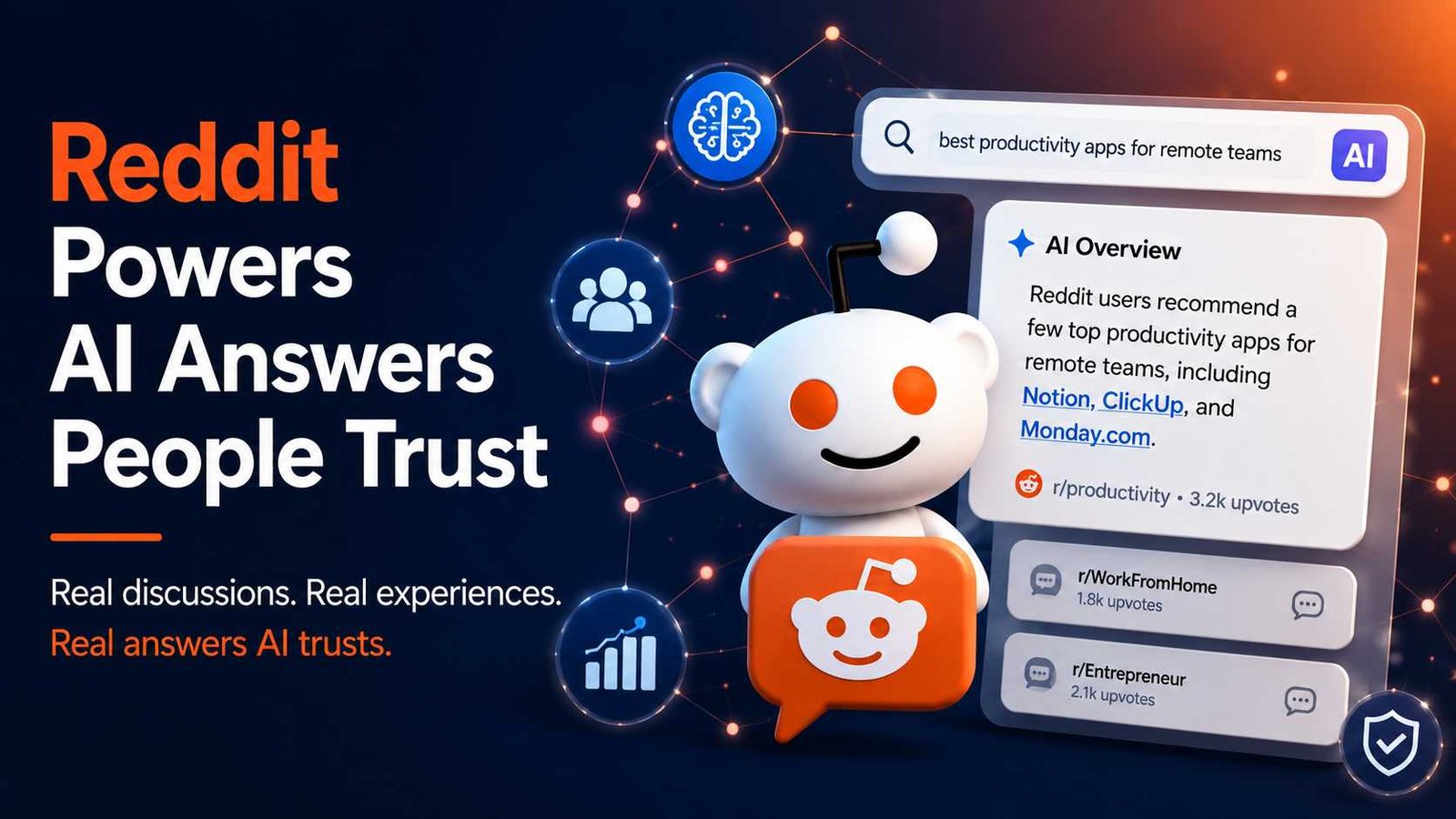
Think about platforms like Reddit or Quora. They increasingly show up in AI answers because they reflect real user experiences, and that’s what AI systems value.
From pages to ecosystems
One article is rarely enough anymore. Top-performing sites build clusters of content that interconnect logically. A guide leads to a comparison, which leads to a case study, which loops back to a foundational article.
This creates context.
Search engines and AI systems don’t just see isolated pages, they see a network. Tools like Screaming Frog SEO Spider or Sitebulb help visualize and optimize this structure.
Where SEO Is Actually Losing Ground
Let’s not sugarcoat it. Some parts of SEO are struggling, and they’re unlikely to come back.
Commodity informational content
Basic “what is” or “how to” articles are the hardest hit.
If your content answers something AI can summarize in three sentences, you’re competing with a system that’s faster and always available.
Sites that relied heavily on this model are already seeing traffic drops. In some markets, position-one CTR has been observed to fall sharply with AI Overviews, as reported in this Google CTR study on AI Overviews and click decline.
Programmatic scale without value
Mass-generated pages targeting slight keyword variations are losing effectiveness.
AI systems don’t reward volume, they reward usefulness. A thousand thin pages won’t outperform ten genuinely helpful ones anymore.
Surface-level listicles
“Top 10 tools” with no real insight. You’ve seen them, maybe even written a few. These are easy for AI to replicate and often improve upon. Unless there’s depth, testing or a clear point of view, they’re fading out.
Where SEO Is Gaining Strength
Now the more interesting part. Some areas are actually becoming stronger because of AI.
Deep expertise and first-hand experience
Content that shows real understanding stands out. Case studies, original research and detailed breakdowns carry weight. For example, work backed by Google Analytics or insights from Hotjar tends to be more credible.
AI systems are more likely to reference content that offers something they can’t generate easily.
Brand-driven search
People are increasingly searching for specific brands.
Not just “SEO tools”, but “Ahrefs vs Semrush”. Not just “AI chatbot”, but “ChatGPT alternatives”. Brand becomes a shortcut to trust, and strong brands tend to survive platform shifts.
Multi-format visibility
Text alone isn’t enough anymore.
Video, audio and interactive content all play a role. Platforms like YouTube and Spotify are becoming part of the search ecosystem, and AI systems often pull from these formats as well.
A Small Story From the Field
A few months ago, I worked with a site that had decent traffic but plateaued growth. They were doing everything “right” by old SEO standards. Keywords were optimized, backlinks were steady, but growth had stalled.
We didn’t chase more keywords. Instead, we rewrote their core content, added original data, included expert quotes and built internal links more deliberately. And something interesting happened. Their rankings didn’t jump dramatically, but their content started appearing in AI-generated answers. Traffic didn’t spike overnight, but engagement improved and conversion rates went up.
It wasn’t about getting more visitors. It was about being the right answer.
So… Is SEO Dead?
No.
But the version of SEO that many people learned five years ago is fading.
The mechanics are changing.
- Rankings matter, but they’re not everything
- Traffic matters, but quality matters more
- Content matters, but context matters even more
SEO is moving closer to what it should have been all along – helping people find useful information, except now the “people” include machines too.
What Should You Do Next
If you’re working on SEO today, the shift is clear. Not easy, but clear.
Focus on building real expertise, not just content but knowledge that actually shows up in your writing. Create depth by going beyond surface answers and covering topics fully, while also strengthening your brand so people search for you, not just discover you accidentally.
At the same time, structure your content well because clarity helps both users and AI systems understand what you’re saying. And keep experimenting constantly, this space is changing fast and what works today will evolve sooner than expected. And maybe the most important shift. Stop thinking of SEO as a traffic channel and start thinking of it as a visibility strategy.