Buying a backlink is easy. Finding a website actually worth buying one from takes more work. That is where Collaborator comes in. It is a guest-post and digital PR marketplace that connects advertisers with publishers while putting pricing, SEO metrics and placement conditions in one place. As of October 2026, its public catalog contains roughly 45,000 websites.
But size is only part of the appeal. What makes Collaborator more interesting is the amount of information available before you place an order.
What Is Collaborator?
Collaborator is a marketplace for buying guest posts and article placements across websites in more than 150 countries and 50+ languages. Publishers list their websites, set prices and specify publication conditions, while advertisers can search the available websites and order placements without approaching each publisher individually. The platform has been operating since 2017.
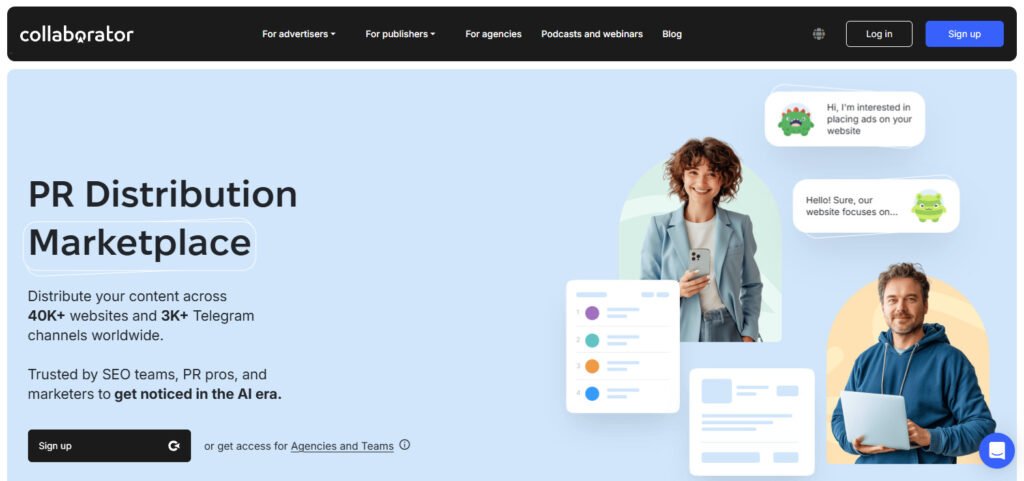
Over that time, it has developed beyond a simple publisher directory. Research tools, first-party traffic data, competitor analysis and newer AI search metrics now sit around the core marketplace.
Exploring Collaborator’s Publisher Marketplace
This is the part of Collaborator I spent the most time exploring.
Rather than just browsing the listings, I tried narrowing it around a fairly specific link-building requirement. I wanted an English-language website relevant to SEO, technology or marketing, listed for the US, with a placement costing between $100 and $200. I also selected growing websites, asked for copywriting to be available and used “boost website ranking” as the target keyword. Collaborator returned 107 websites.
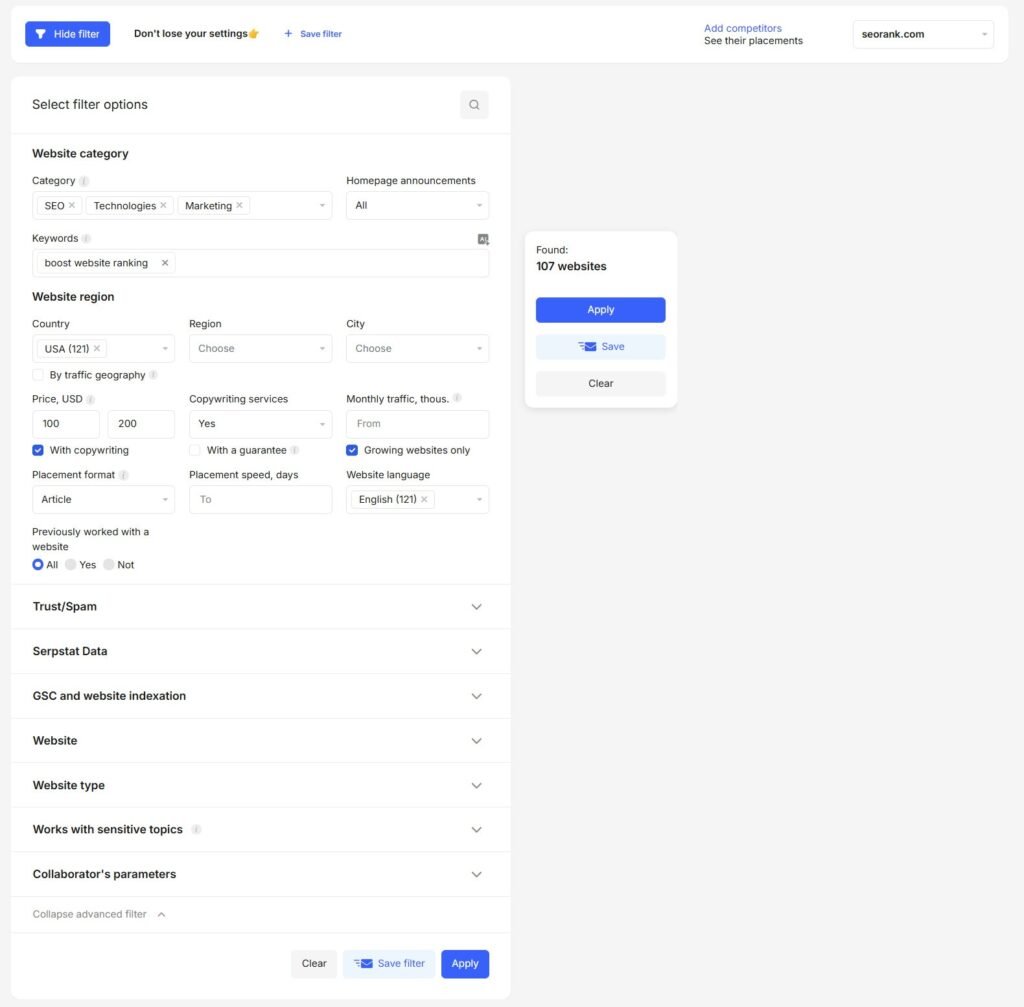
The number itself matters less than how quickly I could get there. Category, keyword, country, price, copywriting, monthly traffic, placement format, speed and language are available from the main filter panel. There are further sections for Trust/Spam, Serpstat data, Google Search Console and indexation, website type and Collaborator’s own parameters. Filters can also be saved if you regularly work with similar campaign requirements.
Once the criteria are applied, the results become much easier to work through. Monthly traffic, traffic sources, DR, categories and pricing are shown alongside the publishers, so you can build an initial shortlist without opening every listing.
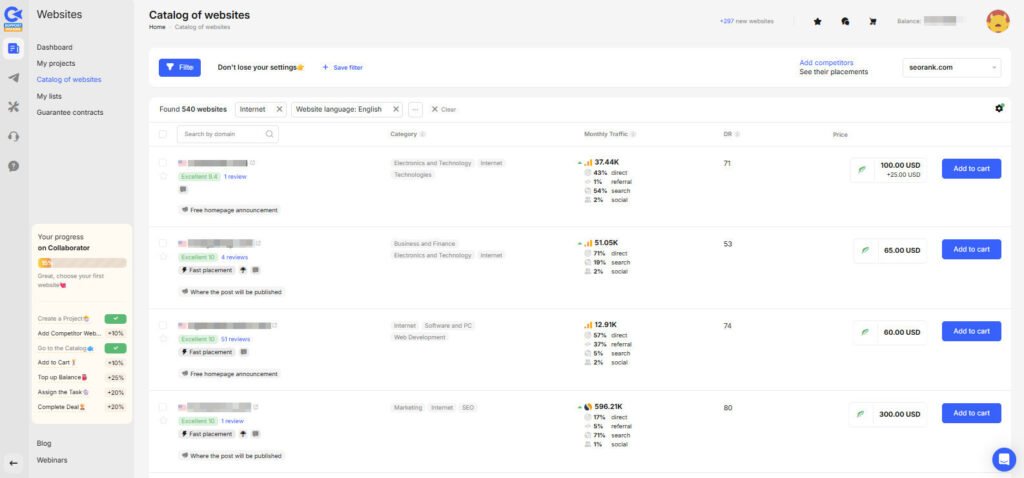
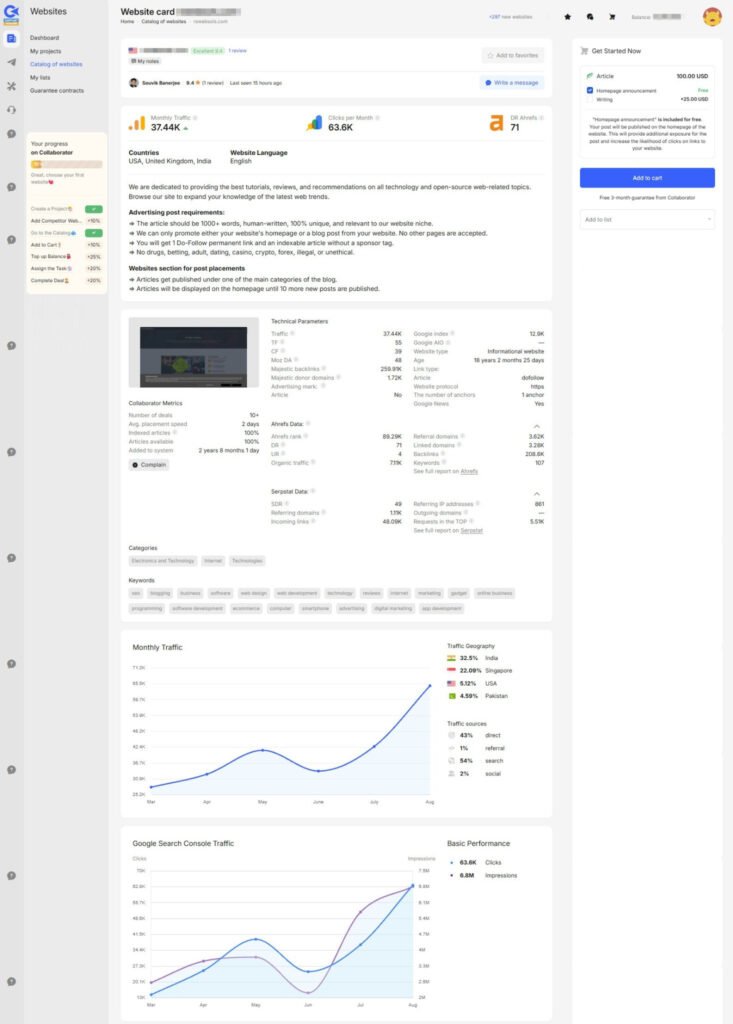
Once you have narrowed down the options, you can open individual publisher profiles for a closer look. This is where much of Collaborator’s research value comes in. A website card can show 15+ technical and performance parameters, including traffic, DR, referring domains, backlinks, Google indexation, website age, link type and advertising conditions. Some profiles also include traffic history, geographic distribution and Search Console performance.
That is a lot of information in one place, and it cuts down the amount of initial research needed outside the platform.
AI Keyword Filtering Helps With Narrower Niches
The keyword field also uses AI to find sites related to a particular topic rather than relying entirely on fixed categories.
That becomes useful when a broad category such as Technology or Marketing still leaves too many unrelated publishers. It gives you another way to tighten the shortlist around what you are actually promoting.
There Are a Few Extras Too
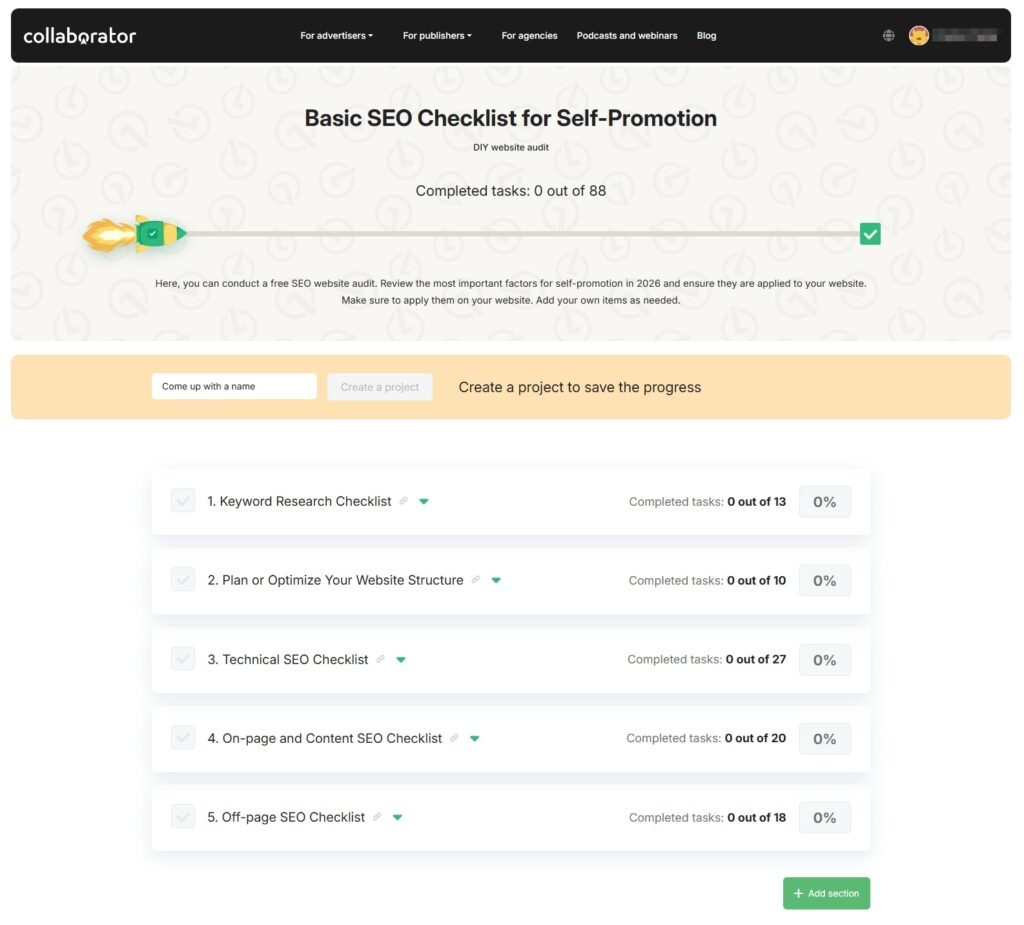
Collaborator has some smaller tools outside the core marketplace, including a free SEO checklist. It breaks a website audit into 88 tasks covering keyword research, site structure, technical SEO, on-page content and off-page SEO.
It is not a reason to choose Collaborator on its own, but it is a useful extra for smaller teams managing their own sites.
Publisher Quality Is Reassessed Over Time
Getting accepted into Collaborator’s marketplace does not mean a website stays there indefinitely.
According to Collaborator’s explanation of its website moderation process, listings can be reassessed and removed if traffic falls, articles stop being indexed or other quality signals deteriorate. This is useful because the quality of a website can change considerably over time.
For more expensive placements, I would still run my own checks before placing an order. But the reassessment process adds another layer of screening when working through potential publishers
AI Overview Visibility Adds Another Layer
Collaborator now shows how many keywords a publisher appears for within Google AI Overviews.
I would treat this as supporting information rather than a buying metric. A site appearing frequently in AI Overviews does not automatically mean a backlink from it will improve your own AI visibility. Still, it is good to see a link-building platform beginning to account for how search visibility itself is changing.
Competitor Backlinks Can Become Prospects
Collaborator can also match competitor referring domains against websites available in its marketplace.
Suppose you find a useful backlink while analyzing a competitor in Ahrefs or Semrush. Instead of separately tracking down the publisher, finding contact details and asking about a placement, you can check whether that website is already available through Collaborator and see its price and conditions.
Backlink lists can be imported as well. It is not a reason to copy a competitor’s link profile, but it is a handy prospecting shortcut.
Pricing Is Transparent, but Factor In the Fees
Publisher prices are displayed inside the marketplace and some websites offer content writing for an additional charge. There is no mandatory monthly subscription.
There are fees, though. Collaborator currently charges advertisers a 10% deposit fee, while publishers face a 15% withdrawal fee, according to its payment policy. That can make a meaningful difference once campaign spend increases, so the advertised publisher price should not be treated as the entire cost.
Some Publishers Have Reported Withdrawal Problems
This is one area worth knowing about before using Collaborator as a publisher.
Several negative reviews on Trustpilot describe money being difficult to withdraw or remaining in an account. The circumstances vary. Some complaints involve minimum withdrawal thresholds; others concern restrictions after previously published sponsored content was removed.
Collaborator has responded publicly to several of these complaints, pointing to its payout rules or publisher obligations around keeping paid content live. So, I would be careful about interpreting the complaints as evidence that Collaborator simply does not pay publishers.
Support Was Quick When I Needed It
I contacted Collaborator’s support while exploring the platform because I needed some clarity on how a few of the filters worked. The response came almost immediately.
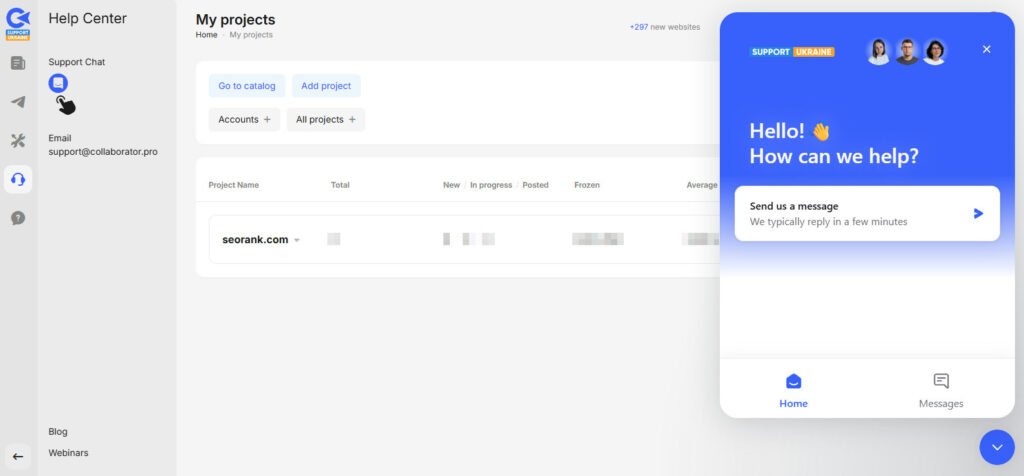
More importantly, the explanation was clear enough to resolve my question without any back-and-forth. Having live chat available is a definite advantage here; for a quick platform-related query, it is far more convenient than opening a ticket and waiting for someone to pick it up.
It was a small interaction, but a good one. On a platform with this many filters and data points, responsive support makes the initial learning curve easier.
The Placement Guarantee Adds Some Protection
Collaborator includes a free three-month protection period for placements. An optional 12-month guarantee costs another 10% and can cover issues such as article deletion or prolonged non-indexation. The precise conditions are available in its advertiser FAQ.
For a cheap placement, I probably would not bother with the additional protection. Once the placement becomes expensive, the calculation changes.
What I Like About Collaborator
The depth of information available before ordering is the strongest part of the platform.
Detailed publisher data – Traffic, geography, SEO metrics and first-party analytics make shortlisting considerably easier
Strong filtering – More than 40 parameters give experienced link builders plenty of control over a very large publisher pool
Useful competitor research – Referring domains can be matched against publishers already available in the marketplace
Continued product development – AI keyword filtering and AI Overview visibility move the platform beyond conventional link metrics
What I Don’t Like
The fees are the clearest drawback. A 10% deposit charge is noticeable for advertisers, while publishers also have to account for the 15% withdrawal fee.
For publishers, the reports of difficulties withdrawing funds are another concern. The circumstances behind these complaints vary, but they are worth being aware of before using the platform regularly.
Our Verdict: Is Collaborator Worth Trying?
Collaborator is a capable link-building marketplace with a large catalog, excellent filtering and plenty of data to help narrow down publishers. Features such as competitor backlink discovery and AI keyword filtering make that research easier.
My experience with support was quick and positive, with helpful clarification when I needed it. The main trade-off, however, is the fee structure, which adds to the cost of regular campaigns.
For agencies and experienced link builders running regular guest-post campaigns, there is a lot to like here.
Best for: SEO agencies, experienced link builders and businesses running regular guest-post campaigns
Main strength: Detailed publisher data and filtering
Main limitation: Additional fees for advertisers and publishers
Note: This article may contain affiliate links. Please read our full disclosure.